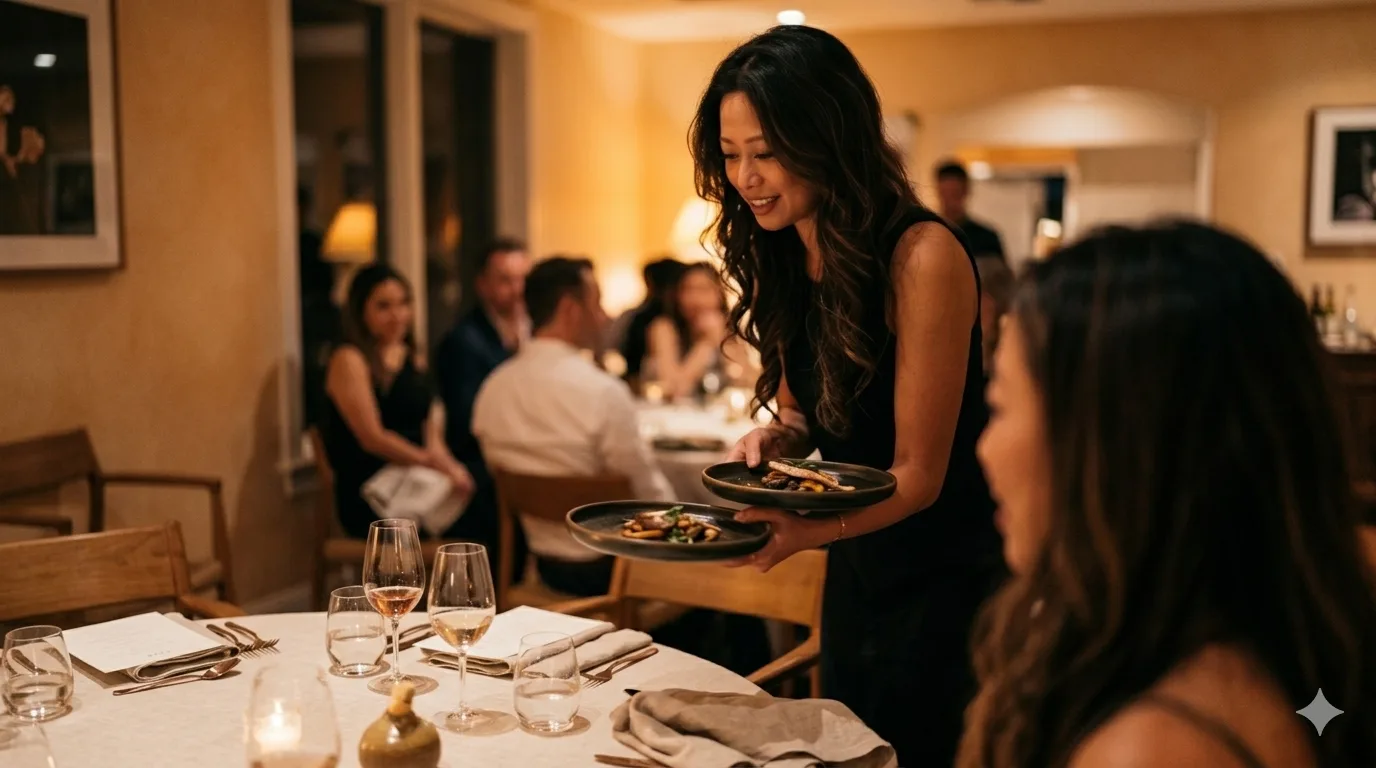

The question comes up naturally when planning a private event: private chef or caterer? On the surface, both seem to serve the same purpose — someone handles the food so you don't have to. But underneath that apparent similarity, the two formats operate on completely different logic. Before you decide, comparing private chef pricing side by side with catering options reveals that the difference isn't always where people expect. Here's what actually sets them apart.
The fundamental difference
It comes down to one sentence: a private chef cooks at your home; a caterer cooks for you — but elsewhere, earlier, and delivers the result.
This isn't just vocabulary. It's an entirely different model. The private chef is present, active, and creating something alive while your evening unfolds. The caterer manages a production and delivery chain — efficient, but by definition distant from your table.
For an intimate dinner of 2 to 20 guests where the experience matters as much as the meal itself, these two formats don't deliver the same thing. The confusion comes from both often marketing themselves as "high-end." On the plate, the difference is immediately apparent.
The private chef: a live experience
When Elie arrives at your home, he doesn't drop off sealed containers and leave. He sets up in your kitchen, unpacks his fresh ingredients, and gets to work. The evening begins coming alive well before the first course arrives at the table.
The chef is present for the entire evening — from setup through the final dessert. The menu has been designed specifically for your occasion and your group. Nothing is standardised, nothing is reheated. It's live cooking, happening in real time, at the pace of your evening.
This presence changes the dynamic in a fundamental way. Guests sense the attention and intention behind each plate. The experience becomes an event in itself — not simply a meal that happens to take place at home.
« I'd tried catering for a group of ten before. The food was fine but cold and standardised. The following year I tried Elieatable — the difference was total. »
Ready to choose the real experience for your next occasion?
Check AvailabilityCatering: a delivery model
A caterer prepares their food at a central kitchen, often hours or even a full day in advance. The food is packaged, transported, then either reheated on site or served at ambient temperature. For very large events of 50, 100 or 200 guests, this is the only viable solution — and the best Montreal caterers excel at it.
But this logistics model comes at a cost in terms of experience. The food wasn't cooked for you specifically, that evening, in your space. Personalisation is structurally limited. Service is often handled by staff different from the people who cooked. And the intimacy of a private dinner gets diluted in the format.
Side-by-side comparison
| Situation | Private Chef | Caterer |
|---|---|---|
| Intimate dinner (2–20 guests) | Ideal | Oversized |
| Large event (50+ guests) | Not suited | Well suited |
| Personalised menu | Yes | Limited |
| Fresh cooking on site | Always | Rarely |
| Individual table service | Yes | Variable |
| Truly memorable evening | Yes | Variable |
Why Elieatable is not a caterer
Elie is a private chef, not a caterer. This distinction isn't semantic — it reflects a fundamentally different way of working. At Elieatable, there is no central kitchen, no advance production, no standardised menu pulled from a catalogue of options.
Every evening starts from scratch. Elie arrives at your home, cooks in your space, adapts the menu to your group, and stays present until the end of service. The ingredients are purchased the same day, selected for the menu designed for you. Every plate is assembled at the moment of service, not hours before.
That's the opposite of the catering model — and it's exactly what creates evenings people talk about for months afterward. If your occasion deserves better than a standardised formula, book your evening here. Weekends fill up quickly, especially during the holiday season.